Book a Demo
On-Demand Webinar

The Intelligence Advantage: How AI Is Rebuilding Sustainable Growth in Behavioral Health

60-minute session

Every behavioral health operator is fighting the same battle: not enough staff, not enough visibility, and not enough hours in the day. For the last decade, growth has meant adding headcount and ad spend to a manual operating model. That model has a ceiling, and most organizations are already at it.

AI changes the underlying economics of growth, rather than just the volume of it. But separating real operational value from hype requires a clear-eyed look at where AI is actually working today — and an honest conversation about the ethical and compliance questions that come with it.

Watch David Farache (CEO, Dazos), Dan Gemp (Founder, Gempire Advisory), and Robert Harrison (Executive Advisor of Innovation, Recovery Unplugged) in a 60-minute session built for the leaders actually running these organizations: CEOs, COOs, and leaders in Admissions, Marketing and Business Development.

Watch on demand

The Short Version

For a decade, behavioral health grew by adding headcount and ad spend, but reimbursements are flat or falling and every new dollar buys less. AI changes the math by reclaiming staff time and answering the calls operators already paid to generate, while surfacing revenue leakage the moment it happens. Recovery Unplugged grew sales 15% while shrinking its call center, and recovered eight admissions in month one from calls it would have missed. Responsible adoption comes down to HIPAA-compliant tools and vetted vendors, with governance set before the first patient interaction.

Session Highlights

Watch Key Moments

Short clips from the panel. Fill out the form above to watch the full 60-minute session.
Webinar - AI in BH - $200K Win

Eight calls they were going to miss, and a $200,000 month

In the first month after turning on AI call answering, eight first-time callers reached a live admissions rep on calls the team would otherwise have missed. All eight admitted. That's roughly $200,000 in month one, and the reason this operator kept going.

Robert Harrison, Recovery Unplugged
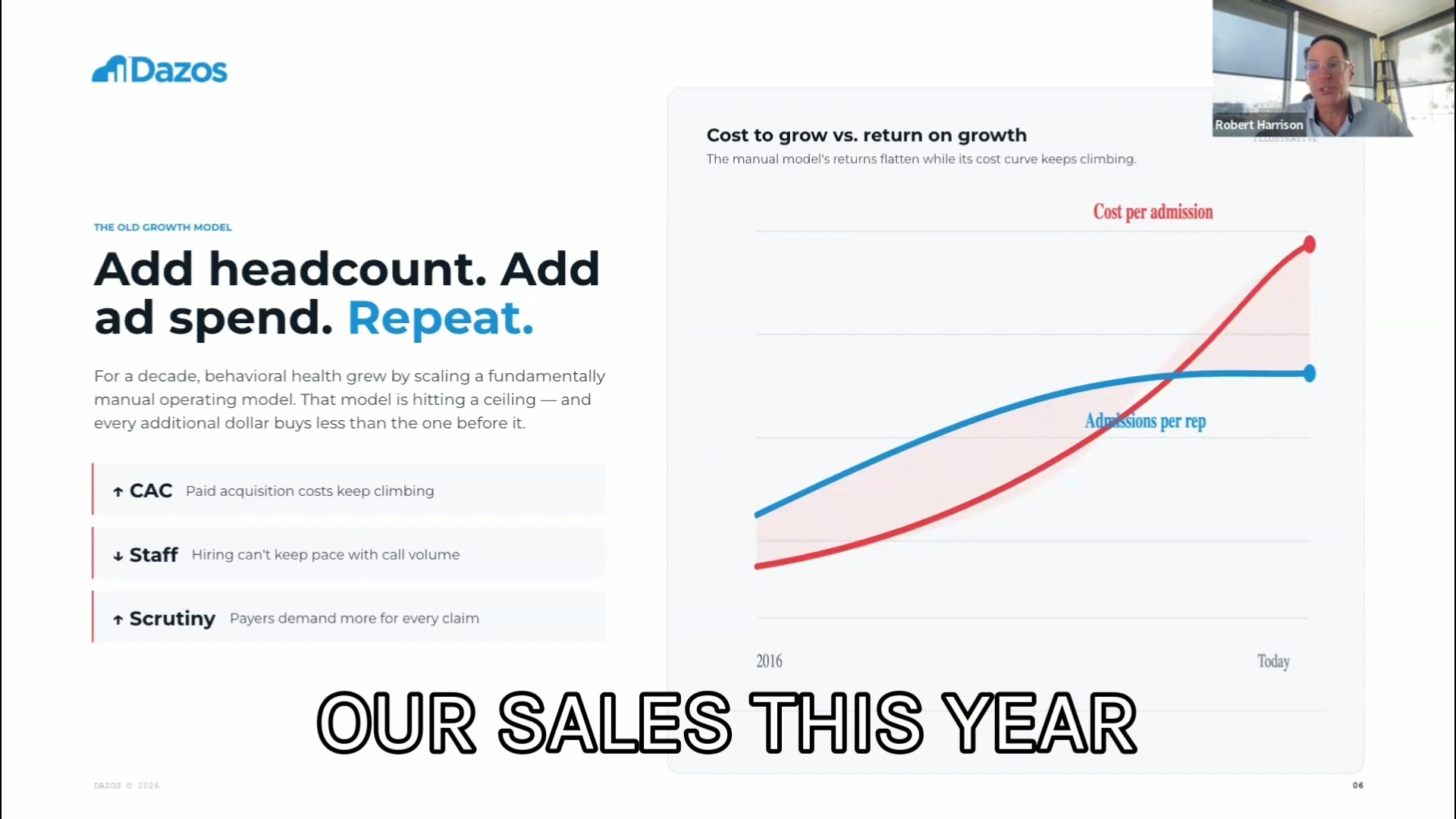
Webinar - AI in BH - 15 Percent Growth

Sales up 15% with a smaller call center

Instead of piloting AI in one corner, this team audited the whole company for manual work and gaps where AI could cut labor or lift revenue. Sales grew 15% this year while call center headcount came down, breaking the old pattern of staffing up for every increase in volume.

Robert Harrison, Recovery Unplugged
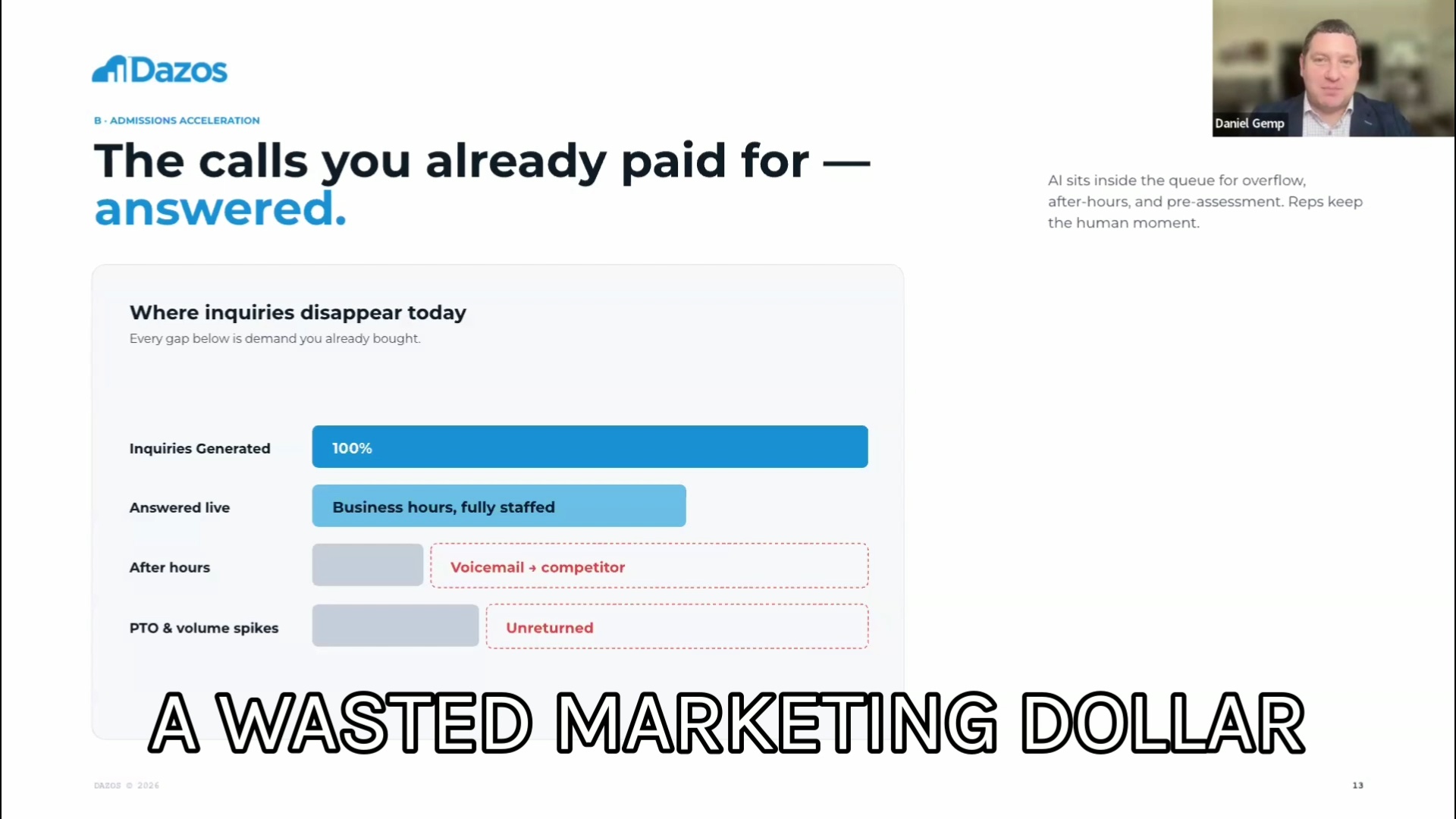
Webinar - AI in BH - Zero Missed Calls

Tape this to the call center wall: zero missed calls

A missed call is a wasted marketing dollar. With paid search costs climbing and AI results cutting into click-throughs, agentic answering integrated with your CRM covers after-hours and overflow, and keeps calling back the leads your team couldn't reach. Anything less and you're paying for calls you never handle.

Dan Gemp, Gempire Advisory
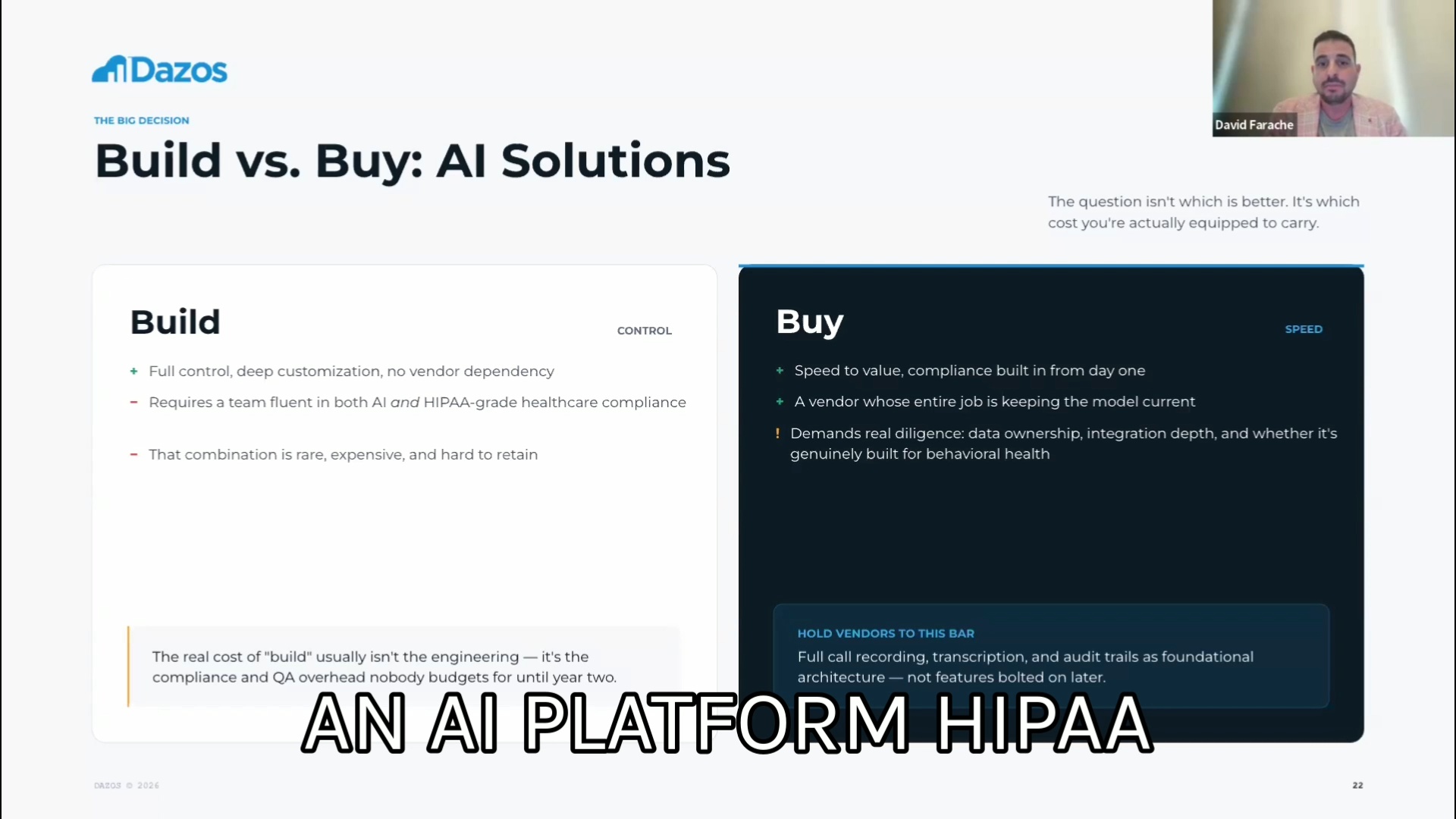
The lawsuits have started. Get your governance in place.

Buying a tool doesn't transfer the liability. Most AI vendors have no healthcare experience and can't make a platform HIPAA compliant, and you can't simply sign a BAA with a general-purpose model provider. What this actually takes: documentation, training, published standards, a healthcare-focused vendor you've verified, and a look at whether your insurance covers any of it.

Dan Gemp, Gempire Advisory
On the panel

Meet Your Speakers

DF

David Farache

CEO, Dazos

DG

Dan Gemp

Founder, Gempire Advisory

RH

Robert Harrison

Executive Advisor of Innovation, Recovery Unplugged

FAQ

Questions From the Session

How do we get started with AI in our organization?
Start with an assessment of where you stand. Robert Harrison recommends measuring the basics first: missed calls, therapist caseloads, documentation time, and productivity. Once you know where the organization is losing time or revenue, you can prioritize. He suggests talking to your existing software vendors about their AI tools and getting an outside evaluation before committing to anything.
With so many systems, how do we connect the data into one picture?
No single system does everything well, so the goal is best-of-breed tools that integrate cleanly. David Farache explained that most platforms start with one strong function and treat everything else as a side project. The better outcome is a system that does its core job well and connects to your other systems, so data never has to be entered twice and never conflicts across platforms.
Is it better to build our own AI or buy from a vendor?
Buying is the safer default for most behavioral health operators. Dan Gemp framed build versus buy as a question of exposure rather than ethics. You can build almost anything now, but a mistake in healthcare carries HIPAA fines and reputational damage. Building also costs more than people expect once you add developer salary, AI credits, and hosting, which often exceeds the price of a third-party solution.
Why can't we just use ChatGPT for patient or billing data?
The free version is not HIPAA-compliant, so patient data put into it can become a violation. Dan Gemp gave the example of an analyst exporting billing data into a public ChatGPT session, where every record becomes a potential fine and a data leak. David Farache added that you cannot simply sign a BAA with Claude or OpenAI. Compliant AI in healthcare requires vendors who build for it deliberately.
Will AI replace our admissions reps and call center staff?
The goal is the opposite of replacement. Every client admitting to Recovery Unplugged still speaks with a live person. AI picks up when reps are busy or after hours, gathers information, and transfers the caller to a human once a rep is free. That lets reps spend their time selling and building rapport rather than on data entry. David Farache described the endpoint as reps spending nearly all their time on the phone.
How much revenue is actually at stake in missed calls?
Enough to change a month. Recovery Unplugged saw eight first-time callers admit in the first month of using AI, calls the team would otherwise have missed, which Robert Harrison estimated at roughly a $200,000 win. Dan Gemp frames every missed call as a wasted marketing dollar, since you already paid to generate that inquiry through campaigns and staff.
Do patients accept talking to an AI during intake?
Many do, and some prefer it. Robert Harrison noted that certain patients feel as comfortable with the AI as with a person, and a few feel less judged answering intake questions. Dan Gemp made transparency a hard rule: patients should always know when they are talking to AI, and there should be a fast human escalation path. The point is to help people reach care, not to trick them.
Where does AI help admissions without removing the human moment?
AI fills the gaps around the human conversation, not the conversation itself. Robert Harrison described three places it helps: overflow when every rep is on the phone, after-hours coverage, and repetitive pre-assessments for returning alumni. In each case the AI collects information and hands off to a person, so the rep spends time on rapport and judgment while the redundant data capture happens automatically.

Watch Full Session

The complete 60-minute panel, plus the operator Q&A.

Watch on demand